





COSTLY WINTER CAR REPAIRS YOU WANT TO AVOID
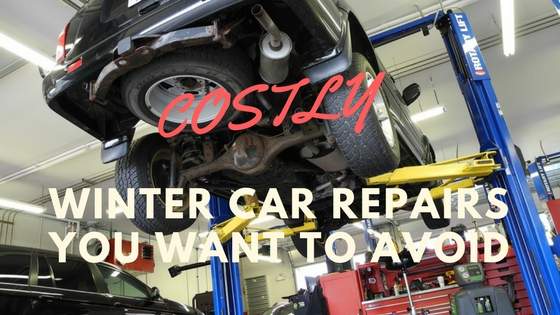
When the harsh and cold winters arrive, one thing we need to have working in top condition is our cars. Without cars, we are left to fend for ourselves in the winter which obviously nobody wants to do. At that point, then, you should some more time looking at how to keep your car in the best position and condition that you can.
To do that, here are some of the most common winter c-ART are repairs that you might want do your best to avoid, or risk seeing your Christmas budget vanish without a trace!
• Tire Damage. Alright, so tires aren’t the most expensive item to repair on the list but they are still an expense; one you could spend more on than you intended in the wrong situation. Tires make up a large part of the cost for standard car repair in the winter, though, so keep that in mind. Always drive at a slower pace and a more considered style during the winter; if you go too fast and/or too hard, you’ll be left with tires that are likely to get ripped up in the depths of the winter. Also, get tries aligned and rotated as often as possible to avoid uneven wear and tear on the tires themselves.
• Airbag Replacement. The sheer variety of costs involved in an airbag replacement can go way above the $5,000 mark. Because of the sheer range of invention in the airbag compartment, it can take a long time to find the position needed to get the repairs made; meaning that you can see more than your fair share of damage take place. At the same time, though, you need to look closer at why an airbag replacement may be needed; take better care of your car, always be conscious of driving decorum in the winter, and you can avoid being caught up in a damaging and gruesome smash!
• Camshaft Damage. These tend to come up semi-regularly in winter for cars that were already quite heavily damaged. This can cost you over $3,000 if the wrong thing happens, so you can find yourself dealing with one of the most painful and expensive of treatments. This can mainly be changed by using regular oil changes and to make sure that you go for camshaft adjustments; this can avoid it becoming broken or bent.
• Transmission Failure. Another common issue is a failure with your transmission. This can be a major issue when it takes place, and this can be quite hard to deal with for the most part. This can also cost you over $3,000 in the wrong car, purely because the transmission can be so complex to fix and repair. Without it, though, your car is more or less unusable. To avoid this happening, keep your car running for 5-10 minutes before you start driving off. It means an earlier rise in the morning, but it’s worth it to avoid those costs!
Avoid the four above issues by simply taking better care of your car, and you far more likely to have a winter that you can actually enjoy for a change.
ALL ABOUT CAR TRADE-INS
When it comes to getting a car trade-in to go your own way, you can find it’s a battle of the mind as much as anything else. Trading a car in and walking in knowing that you just got good value for all of your hard work is very important. However, many people walk out of a dealership all high-fives only to find out that they have been comprehensively ripped off!
To help you avoid that embarrassment, here are some decent car trade-in tips that we live by. With these, you are far more likely to get a car trade-in that is going to really make a big difference.
Getting The Best Car Trade-in Value
• Start off by paying attention to market value; with so many price comparison sites out there, ignorance is no excuse. You don’t need to be a walking dealership to know a cars value; just look it up online. Make sure you are arriving with a value in mind and don’t budge too far from it. this can make it much easier for you to get a price that you can feel like is good value for your car.
• Bring all of the details that you can about the cars history; mileage, maintenance records, any incidents and other problems should all be noted down as quickly as you can. This should make it easier to convince the dealership that you have taken good care of the car and that they can feel comfortable buying it off of you in the first place.
• Try and spruce up the motor as much as you can; a bit of extra work can add on a lot more in terms of what you paid for the work to be done to the cars value. Get rid of bad smells such as cigarette smoke, and get rid of all trash; vacuum up inside and make sure it looks as close to the standard as possible. The dealer should be able to see it being sold, not all the work they need to do to make it sell-worthy.
• Negotiate your trade-in as the trade-in alone. When trading in to buy a car that day, you can find all sorts of machinations take place to make sure you get less value for what you are buying. The trade-in always is weaker compared to the new buy, so making sure you can give them reason to believe you are here to trade in, not to buy back right away.
• Always be clear you are not a novice, either. Tell them you’ve been reading into the cars value and want to see if they value it at the same level. Call ahead of time and make sure they show a positive mood for the model you are offering them.
• Also, never give over your registration, details or your car keys. Dumb dealerships might try and hold onto them and try play a game to get you to buy. While it’s likely you’ll not react how they want, it will probably land you in trouble.
All things being equal, going along with the above should make it much easier to get a more creative and consistent response long-term.
WHAT IS A FICO AUTO SCORE?

FICO Auto scores are specific industry version. It is delicate and predictive in the potential condition of auto loan repayment crisis. The base FICO Score is created first then adjusted on predicting the probability to pay as agreed in the future such as an auto loan.
FICO score is the basis of FICO Auto Score. FICO Score is the one that designates you in the level of worthiness in any sort of credit. On the other hand, FICO auto score is the one that designates you in the level of worthiness in any sort of credit specifically for auto loans.
Some of the automobile finance lenders use the FICO Auto Score instead of FICO Score. It is essential to know what score lenders need to use in their review process of the credit. They also determine the other information they need to consider in the review process of the credit. They need more information about income, the value of the collateral and employment history of the person.
The FICO Score and FICO Auto Score are different in scoring range. The base FICO score falls between 300 and 850. On the other hand, FICO Auto Score ranges from 250 to 900. As you want to shop for financing to buy car or vehicle, there are some factors that will affect your payment.
Length of Loan
Buyers choose a car loan that lasts for five years or longer. The average car loan length is about 65 months in the last quarter of 2012. The good in having a longer car loan is that in terms of payment, it will be lower. The disadvantage is that you may owe your car or vehicle more than it’s worth.
Down payment
It is made easier for you to reduce the amount you borrow if you have a larger down payment. Some prefer to sell their current car or vehicle to use as a down payment but there are some lenders who don’t require a down payment.
Credit Score
The credit score will help you find out the interest rate of your payment. If ever you don’t have a not so perfect credit, it does not mean that you don’t have a modest rate. The auto lender credit score may be different from the score you see if you have your own credit.
Refinance Car Loan
If you get a lower rate, you will save money and you can pay your loan quickly. There’s another option, which is that you can extend your loan term. It makes your payment affordable. It is easy to do. Just refinance your auto loan then apply to determine if you qualify for it.
In time, the lenders will check your credit or even request a score. It will be noted on more than one of your credit reports but most credit score structure will ignore the current auto loans queries. If you want to protect your credit, watch out for the interest rates for it may increase without any notice. If you are desperate to have a car or vehicle, try to get a personal loan. If you can’t, try a non-profit credit agency which can help you find solutions in times of financial difficulties.
WHAT TO DO IF YOUR CAR OVERHEATS.
When you are driving around in your car, one of the most common yet easily avoided problems can be overheating of the vehicle. Should this happen to you it can be a source of worry, frustration and confusion.
Thankfully, dealing with an overheated car isn’t quite as challenging as it might sound: when managed in the right way, in fact, it can be pretty easy to administer. Let’s take a look at what that might entail.
If you are worried about overheating, or it has happened before and you had no solution, you should try and implement the following:
• Look for Steam. Steam is the obvious sign – no smoke without fire, and no heat without steam. If you see steam pouring out, then you have an engine that cannot handle itself. Steam is not something that you should just ignore – and it certainly isn’t something that you should expect to see.
• Lower The Temperature. Next, be sure to turn off the A/C unit and then turn on your heating unit. That might sound counterproductive, but turning up the heating to full directs heat from the engine to elsewhere. Just make sure you avoid this on a sunny day – you might melt! Being serious for a moment, though, your vehicle’s health and safety is far more important than feeling a touch too warm for a few moments.
• Shut Off The Engine. A no-brainer, but getting the engine off nice and fast is pretty important, too. You should look to do this as it stops your car from heating up more and gives the engine a nice little breather in the first place. If you are not comfortable with the next step, then get out your phone and get some roadside assistance to help.
• Get It Cooled. Pop up the hood of your car, and you should immediately feel a waft of heat hitting you. Also, only open up the hood if you feel like you can either handle the heat or that it does not feel too dangerous. This is very important, as going in too early can be just as dangerous as doing nothing at all.
• Look For Coolants. Now, your vehicle should have a coolant section near the radiator. Typically, this will be made of plastic and is going to be SUPER HOT so don’t just grab onto it or you’ll need a trip to the hospital, stat. Check the coolant gauge, too, and see where it sits – is it normal? Or has it risen to a level that has your eyebrows raised? If it’s low or empty, then you might have a problem. This is the part where most people make the problem worse, so if you are not confident call in an expert to help.
Really, the best bet to avoid any kind of disaster is to hire some kind of roadside assistance. There’s no point taking risks if you are unsure, so be safe!
NEW CARE CARE TIPS

You’ve taken the plunge and brought home your shiny new car. It’s a thing of beauty which you’ll be admiring for a while every time you see it. You’ll likely be hearing advice from friends and neighbors who stop by to see your new ride. Here are a few tips to take care of your new vehicle.
A little care goes a long way.
Brakes
New brake pads on new brake rotors don’t really require a break-in procedure. The texture deliberately left on the surface of the iron discs will grind down the fresh surface of the pad material within a few miles. Even so, refrain from high-speed stops or dragging the brakes for a few hundred miles.
Oil
Change the oil regularly.
Interior
A generous dousing of Scotchgard or a similar protectant on the cloth upholstery and carpets will keep dirt, pollen and mildew from clinging.
Exterior
Protect the paint surface from harsh environmental elements and prevent premature aging with a car wax, paint protectant or paint sealant.
LEASING VERSUS BUYING A CAR
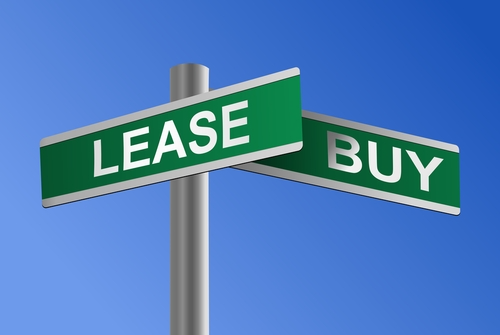
Car shopping means you have a decision to make once you’ve picked out the vehicle you wish to drive home. FH Dailey Chevrolet would like to shed some light in this post about the differences between buying vs leasing a vehicle. If you are financing your vehicle, leasing is one option. Let’s look to see if leasing or buying makes the most sense for you.
Benefits of Leasing a Car
Leasing a car is similar to financing the purchase of the car in many ways, but there are some key differences. You might be able to get more car for less money by leasing. That’s because a car loan is based on the full price of a new car, while a lease is based on only a percentage of the car’s price. For example, on a $30,000 car, you’d finance the entire $30,000 purchase price with a car loan. With a car lease, you only pay the difference between the car’s price and what it’s expected to be worth at the end of the lease, which is a car’s residual value. So if the car’s residual value is 55 percent after three years, for example, that means the $30,000 car would be worth $16,500 at the end of the lease. You’d make lease payments on the remaining $13,500 and not the full $30,000.
If you only have a small down payment saved up, leasing may also be better for you. Many car leases require anywhere from $0 to several thousand dollars up front, though the down payment is negotiable. Many advertised lease offers will promote low payments, but require a sizeable down payment. If you want to put as little down as possible, remember that your monthly lease payments will be higher.
Many leases last about three years, which is typically the length of many new-car bumper-to-bumper warranties. That means the car is usually covered under warranty for repairs for the duration of the lease. You still need to maintain the car, though, which includes oil changes, tire rotations and recommended maintenance from the manufacturer. Failure to properly maintain the car during the lease can result in fees when you turn the car in at the end of the lease.
If you enjoy having the newest high-tech features, leasing could be the better choice for you. Since you’d be leasing every few years, each new car you lease will have the latest and greatest technology and safety features. With a leased car, you don’t have to worry about selling the car or getting a good price for your trade-in. When the lease is up, you can simply turn in the car and walk away.
Benefits of Buying a Car
If you like to keep your vehicle as long as possible, buying is probably better for you. When you buy, you own the car when the loan is paid off.
One of the biggest benefits that buying has over leasing is that there are no mileage restrictions. If you do a lot of driving, buying is probably better for you.
When it comes to buying and leasing, there’s no one-size-fits-all answer. Consider your budget, driving needs, lifestyle and credit history before you decide whether to buy or lease. There are auto lenders who can provide you with financing that works best for you, no matter whether you decide to buy or lease your next vehicle.
If you have any questions about the purchase process please reach out to our team at FH Dailey Chevrolet in San Leandro, California.
SPRING CLEANING TIPS FOR YOUR VEHICLE

Spring is here and you may have the urge to take stock of your home for some spring cleaning. Your vehicle will also benefit from a spring cleaning. We’ve put together some tips to get you started.
Remove anything you don’t need.
Have a garbage bag and a “keep” box handy, because you’ll want to hang on to some of the stuff. Be thorough: Get under and beside the seats and in the trunk.
Slide all of your seats all the way forward and pull out your floor mats, so nothing escapes your notice.
Vacuum the Inside
You’ll want to work from the top down, because gravity dictates that stuff stirred up works its way down to the floor. Also, yank out the floor mats for a quick pass with the vacuum. Then use a house or shop vac and a rigid tool such as a screwdriver to work dirt out of the creases near the shifter or in the console and cup holders.
Scrub Carpet and Upholstery
This step is optional but worth the satisfying results. Grab a spray bottle of automotive-upholstery-and-carpet cleaner and a heavy-duty scrub brush to clean the soft parts of the interior. Spray the seats or anything cloth- covered; scrub, then wipe down. Repeat at least one more time, moving to the carpet for the same job. Being thorough with the carpet is important, as it can act like a wet rag that accelerates rusting. When you’re done, pull the drain plugs under the floor and let things air out for a few days. You’ll be amazed at how much better the car smells.
Use a Magic Eraser to scrub gross sticky things off of vinyl and leather to complete the job.
COMMON CAR RELATED TAX DEDUCTIONS
You may be thinking about preparing your taxes as the April 15 deadline nears. There are some common car-related tax deductions available. Read on to learn more.
If you use your car exclusively in your business, you can deduct car expenses, according to the Turbo Tax website. If you use your car for both business and personal purposes, you must divide your expenses based on actual mileage. Car deductions are for a car, van, pickup or panel truck used for business according to the IRS website.
It is important to note that costs related to travel between a taxpayer’s home and regular place of work are commuting expenses and are not deductible.
If you drive from your usual work site to another job-related destination — a sales meeting, to get office supplies, or to the airport — those miles may be deducted. For example: if you have been temporarily reassigned to another work location that is farther from home, you can deduct the extra distance. However, If your employer reimburses you for mileage, you cannot deduct these expenses on your taxes.
If you use your car exclusively for work then you can deduct 100% of your expenses. This includes gas, registration fees, maintenance, insurance, parking fees and more. Be sure to keep your receipts and keep track of your car expenses.
Also, if you’re in a car accident that isn’t your fault, and the other driver’s insurance doesn’t fully reimburse you for the damage to or loss of your car, you may get a deduction for that unreimbursed amount as a casualty loss. This also applies if the car is repaired but is no longer worth as much as it had been because of its accident history.
For updated information, refer to IRS Publication 463, Travel, Entertainment, Gift, and Car Expenses. For a list of current-year and prior-year mileage rates see “Standard Mileage Rates.” There’s a separate table for those who lease their vehicles. If you are self-employed, you may either deduct your exact expenses or use the optional standard mileage rate to calculate deductions.
We recommend consulting with a tax professional to learn more.
THE 2017 CHEVY BOLT EV
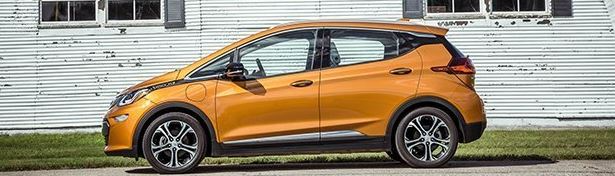
The 2017 Chevy Bolt EV has great range of 200 miles from an electric battery and is priced less than the average new car. It’s a great option for getting around town. A floor-mounted battery powers a 200-hp electric motor; in our testing, we recorded 96 MPGe and a 75-mph highway range of 190 miles. It rides well over rough roads and acceleration is great, launching the car to 60 mph in 6.5 seconds. The cabin has a 10.2-inch touchscreen and a driver-facing 8.0-inch digital gauge cluster. Apple CarPlay, Android Auto, and 4G LTE Wi-Fi are available.
From a beautifully sculpted exterior to its impressive performance, spacious interior and advanced technologies, Bolt EV has completely reinvented what an electric vehicle can be. Want proof? Bolt EV was named Motor Trend’s 2017 Car of the Year.®
We have plenty in stock, view our inventory here.
Our team is on hand to help you setup a test drive and find out for yourself how it drives.
HOLIDAY EVENTS IN THE SAN LEANDRO AREA

F.H. Dailey is proud to be a part of the San Leandro community and wishes everyone a safe and happy holiday season. In that spirit, the San Leandro area is hosting several holiday events in December. What a lovely way to take in the sights and sounds of the holidays.
Light Up the Night
San Leandro highlights some of its neighborhood residences in a special “Light up the Night”. Residents with holiday light displays are featured for viewing.
Tapestry, the Bay Area’s only combined vocal and handbell ensemble, kicks off the holiday season with a weekend of free holiday concerts in Central County.
Under the direction of Cindy Krausgrill, Tapestry will present familiar favorites, such as “O Come, All Ye Faithful” and “Ding Dong Merrily on High” as well as some not so familiar, like “Nutcracker Jingles.” Visit here for more information.
Take in the scent of pine and pick out a tree for the season at one of Piedmont’s most enduring family traditions continues with the opening of the Boy Scout Christmas tree lot at 9 a.m. Nov. 26 at Coaches Field.
An East Bay tradition for almost five decades, the lot boasts a broad selection of freshly cut, high-quality trees, garlands and wreaths, and is staffed by enthusiastic Cub Scouts, Boy Scouts, coed Venturing crew members and adult volunteers.
– As reported in the East Bay Times
Connect with us


- March 2024
- December 2019
- October 2019
- September 2019
- August 2019
- July 2019
- May 2019
- April 2019
- March 2019
- November 2017
- October 2017
- September 2017
- August 2017
- July 2017
- June 2017
- May 2017
- April 2017
- March 2017
- February 2017
- December 2016
- November 2016
- October 2016
- August 2016
- July 2016
- June 2016
- May 2016
- April 2016
- March 2016